Decentralizing Fleet Ops: Managing Distributed Assets and Peer-to-Peer Transit Workflows

November 10, 2026 · 25 reads
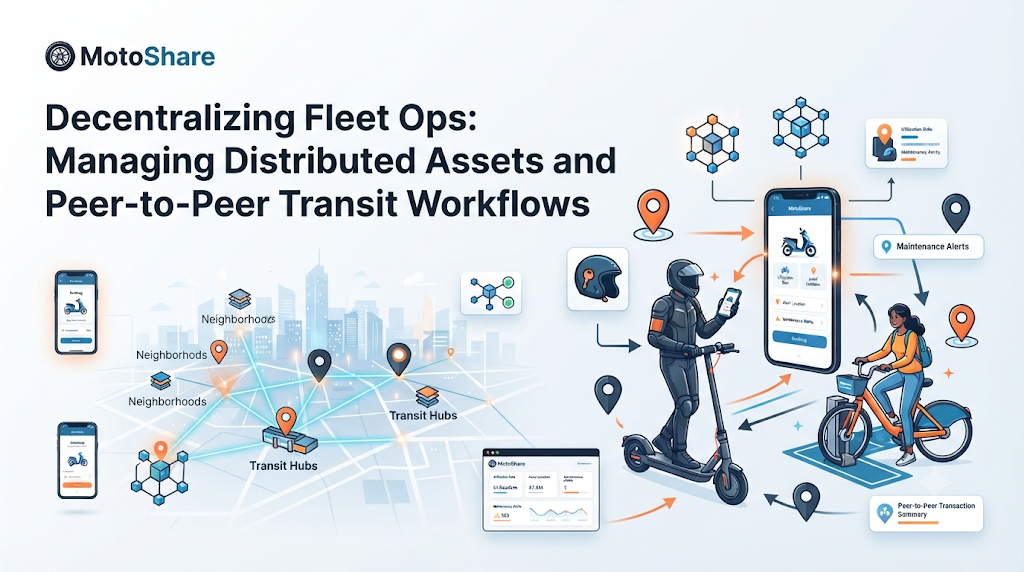
In site reliability engineering and cloud architecture, we spend our time building resilient automation pipelines, eliminating tight coupling, and optimizing resource pools across multi-tenant environments. Yet while our digital workloads scale dynamically on-demand, physical transportation and vehicle logistics have historically remained bottlenecked by rigid, monolithic infrastructure. Traditional car rental agencies operate like legacy data centers—heavy upfront capital expenditure, bloated administrative overhead, rigid scheduling, and opaque pricing models.
Today, a parallel automation and decentralization wave is sweeping across American transportation. Through peer-to-peer marketplaces, underutilized physical assets are indexed into dynamic, distributed asset pools.
The Search Query Starts With a Core Workload Constraint
When an engineer, sysadmin, or remote professional looks for temporary transportation, the request is rarely driven by brand loyalty or a trip to a legacy commercial lot. Instead, it is triggered by an operational requirement or execution constraint.
Consider a site reliability engineer taking a weekend sprint away from production environments to test routing topologies on a two-wheeled node. For that deployment, agility, minimal mass, and direct environmental telemetry are paramount—demanding a motorcycle. Conversely, a distributed development team arriving at a regional office with diagnostic hardware, workstations, and multiple operators requires a four-wheeled container with high payload capacity and robust safety margins. Meanwhile, an urban developer navigating dense municipal grids prioritizes low-footprint micro-mobility and efficient parking algorithms, making an electric or gas scooter the optimal choice.
This functional diversity explains why search telemetry spans distinct vectors. While an enthusiast might query motorcycle rentals near me for weekend transit, a team planner will execute searches for car rentals near me, and an urban commuter might look into scooter rentals near me for localized first-and-last-mile connectivity.
System Architecture: How Peer-to-Peer Mobility Networks Function
To understand how modern vehicle sharing achieves scale without relying on massive centralized capital expenditures, we must analyze its underlying distributed architecture. Traditional rental agencies operate on a centralized provisioning model—massive physical lots filled with homogenous inventory units managed by legacy software. Peer-to-peer marketplaces replace this bottlenecked model with a distributed node network, connecting everyday asset owners directly with verified end-users.
The provisioning workflow initializes when a node owner publishes structured telemetry data: accurate hardware specifications, high-resolution visual assets, maintenance history logs, and strict operational constraints. On the demand side, users execute filtered queries based on geographic bounding boxes, temporal availability windows, and vehicle class parameters. Once a state match is achieved, transparent booking protocols execute the terms of engagement.
Because these transactions involve independent physical nodes rather than uniform commercial fleets, several system checks must execute prior to state handover:
- Data Integrity and Listing Accuracy: Hardware specifications and telemetry images must accurately reflect the node’s physical state to prevent runtime failures at handover.
- Temporal Synchronization: Calendar protocols must eliminate race conditions and double-booking overlaps across concurrent requests.
- API-Driven Communication Channels: Direct messaging layers allow operators to query owners regarding undocumented operational quirks or vehicle behaviors.
- Credential Verification Engines: Identity and licensing verification pipelines ensure users hold valid regulatory endorsements, particularly for motorized two-wheelers.
- Risk Mitigation Protocols: Comprehensive insurance frameworks establish hard boundaries for liability and fault domains.
- State Inspection Handover: A physical walkthrough establishes a shared baseline of the node’s initial wear state prior to route execution.
Through peer-to-peer motorcycle rental and peer-to-peer car rental protocols, the sharing economy optimizes capital efficiency, transforming dormant physical assets into active network resources.
Evaluating Transport Nodes: Cars, Motorcycles, and Scooters
Matching the correct transport category to an operational itinerary requires evaluating performance constraints, environmental factors, and payload capacities.
Four-Wheeled Infrastructure for Heavy Workloads
For multi-passenger transit, long-distance highway routing, and high-payload requirements, automobiles remain the baseline standard. They provide environmental isolation, structural safety, and predictable long-haul endurance.
Two-Wheeled Agility for Individual Transit
For solo transit and leisure excursions, motorcycles offer high power-to-weight ratios and minimal spatial footprints. However, they demand strict adherence to environmental monitoring (weather APIs/conditions) and verified operator proficiency.
Urban Micro-Mobility via Scooters
In dense municipal centers, scooters provide high-efficiency short-distance transit. Their lightweight build bypasses traffic bottlenecks, provided operators maintain compliance with local transit codes and safety gear requirements.
A Regional Case Study: Logistics in Hilton Head Island
To observe how these decentralized networks function in a specific geographic cluster, consider Hilton Head Island, South Carolina. Characterized by resort corridors, recreational greenways, and seasonal traffic spikes, the region demands adaptive transit solutions.
A family or engineering team operating within the resort zone typically deploys a car rental Hilton Head Island solution to manage group logistics, equipment transport, and multi-stop itineraries. Conversely, an individual looking to optimize transit efficiency along coastal routes might query a motorcycle rental Hilton Head Island node. Both use cases rely on validating licensing credentials, inspecting maintenance logs, and ensuring adherence to state-specific safety statutes.
Note: All search outcomes depend entirely on real-time node availability and verified local inventory rather than static corporate guarantees.
Pre-Flight Checklist: Validating a Rental Agreement
Before committing state changes to a vehicle-sharing agreement, users should run through a rigorous validation checklist:
- Does the temporal availability window match the execution timeline without forcing bottlenecked returns?
- Do the asset descriptions and telemetry photos match the physical node?
- Is the pricing matrix fully transparent, with zero hidden execution fees?
- Are there mileage caps or geographical fencing restrictions?
- What are the fault boundaries and coverage limits defined by the insurance policy?
- What authentication credentials (licenses, IDs) are required at handover?
- What are the exception handling rules for cancellations and deposits?
- What is the escalation path if a mechanical exception occurs mid-route?
The Supply Side: Monetizing Underutilized Hardware
Vehicle sharing is a bidirectional architecture. For the typical household, cars and motorcycles remain in an idle state for the vast majority of their lifecycle—accumulating depreciation, insurance overhead, and maintenance costs while parked.
Exposing an underused asset to a marketplace transforms a static financial liability into an active revenue-generating node. For enthusiasts who only utilize their machines intermittently, choosing to rent out my motorcycle allows them to offset maintenance costs while sharing their hardware with fellow riders. Similarly, property owners who list my car for rent turn a driveway asset into a productive local utility.
As independent operators scale from a single asset to micro-fleets, administrative complexity increases. Managing booking calendars, tracking maintenance schedules, handling customer data, and maintaining compliance documentation requires robust software tooling. Consequently, operators frequently search for free car rental software to streamline their management overhead. When evaluating such tooling, operators must audit security protocols, verify feature tier restrictions, and ensure clean API integrations with existing workflows.
Trust and Marketplace Integrity
The success of any peer-to-peer distributed network rests on cryptographic and cultural trust. Transparent pricing engines, automated identity verification, honest node descriptions, and robust insurance frameworks are essential to maintaining ecosystem liquidity. When platform integrity is enforced, vehicle sharing transitions from an experimental concept into a dependable pillar of modern infrastructure.
The Horizon of Decentralized Mobility
As digital workflows and consumer preferences continue to evolve, American transportation is moving toward greater flexibility, smarter discovery algorithms, and optimized asset administration. By connecting independent hardware owners with individuals requiring temporary mobility, platforms like MotoShare provide a scalable, community-driven alternative to legacy rental monopolies—optimizing how we move across the country.
Leave a Reply