Code to Commute: How Platform-Driven Mobility Is Transforming Travel Across Mexico

November 15, 2026 · 26 reads
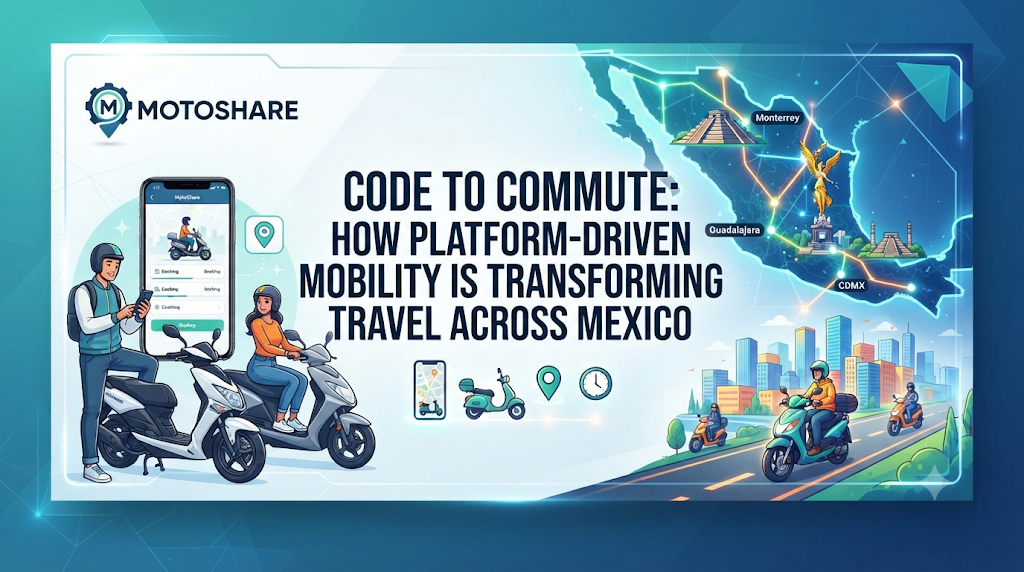
If you spend enough time looking at how engineering teams and tech professionals operate in modern Mexican hubs, you notice a recurring theme: efficiency isn’t just for software deployment; it applies to physical life, too. From the data-driven gridlock of Mexico City to the surging tech corridors of Guadalajara and the industrial networks of the Bajío, how we move matters. For years, city life dictated a rigid rulebook—buy a car, absorb the depreciation, and accept endless maintenance overhead. But just as cloud architecture disrupted traditional server hosting, the sharing economy is rewriting how we approach daily transport.
For the developer dodging morning rush hour, the product manager flying into Monterrey for a sprint, or the infrastructure engineer looking for a weekend escape on two wheels, traditional car ownership often feels like an outdated monolith. Modern professionals need flexible, on-demand solutions that scale up or down based on their actual lifestyle, bypassing the friction of legacy agencies and long-term commitments.
Debugging the Daily Commute on Two Wheels
Navigating dense metropolitan streets requires agility, and in places like CDMX, two wheels consistently outperform four. Motorcycles have graduated far beyond simple courier tools; they are now precision instruments for urban survival, cutting down commute times and dodging bottlenecks with surgical efficiency.
Yet, buying a specialized bike just to manage peak-hour traffic or short project cycles doesn’t always compute financially. This is where the appeal of short-term alternatives shines. Renting a motorcycle by the day allows tech-savvy commuters to test different setups—from nimble commuter scooters to high-performance machines—without tying up capital.
When evaluating costs, experienced urban riders know that pricing isn’t a one-size-fits-all API call. Rates depend on a variety of parameters:
- Displacement & Architecture: Light utility scooters versus high-torque sports builds.
- Duration Logic: Short daily sprints versus extended weekly allocations.
- Geographic Nodes: Tariffs shift between high-density capital centers and regional tech hubs.
- Security Deposits & Coverage: Built-in safeguards that protect both provider and rider.
High-Performance Sprints: Power and Precision on the Open Road
Beyond routine infrastructure commutes, Mexico’s winding mountain passes and coastal highways call to a different kind of enthusiast. When the weekend hits, riding a high-performance machine through the scenic routes around the Valley of Mexico offers a vital psychological reset.
Rather than locking yourself into owning an expensive sports bike that sits idle in a garage five days a week, accessing sports motorcycles through peer-to-peer digital channels lets riders experience elite engineering on demand. Whether you want to test-ride precision models from manufacturers like Bajaj or Honda for a weekend road trip, the flexibility is unprecedented. Of course, high performance demands strict protocols—certified gear, proper protective equipment, and a deep respect for transit safety are non-negotiable requirements for any deployment.
Scaling Up: Four Wheels, Clean Energy, and Fleet Flexibility
When work or leisure demands cargo space, group travel, or long-distance highway miles, two wheels won’t cut it. The traditional process of renting a car used to involve tedious counter paperwork and hidden fees—a friction point that digital marketplaces have successfully optimized.
Whether you are deploying to Puebla for an on-site client meeting, road-tripping to Querétaro, or exploring the coast, having the right vehicle transforms the journey. Modern vehicle selections range from compact urban cars to spacious SUVs. Meanwhile, the push toward sustainability has made electric vehicle rentals increasingly popular, allowing drivers to test out zero-emission driving, silent torque, and local charging ecosystems firsthand before committing to a permanent purchase.
Optimizing Idle Assets: Putting Your Vehicle to Work with MotoShare
In the world of distributed systems, idle capacity is wasted capacity. The same logic applies to personal vehicles. For many owners, cars and motorcycles sit parked and dormant 80% of the week, accumulating fixed costs like insurance, taxes, and depreciation.
Instead of letting an asset sit idle, platforms like MotoShare allow vehicle owners to list their cars or bikes for rent when they aren’t using them. By turning a depreciating parked asset into a revenue-generating node, owners can easily offset their maintenance overhead. Successful hosting comes down to a few core operational best practices:
- Clean Documentation: High-resolution photos that accurately represent the vehicle’s current state.
- Clear Metadata: Transparent descriptions covering fuel efficiency, model specs, and mileage expectations.
- Proactive Maintenance: Ensuring mechanical checkups are up to date to guarantee reliability.
- Smooth Handshakes: Establishing straightforward pickup and return guidelines for a seamless user experience.
The Future of Distributed Mobility
Mexico’s transportation landscape is evolving past rigid ownership models toward fluid, on-demand accessibility. Whether you are optimizing your daily route through city traffic on a nimble scooter, renting an electric car for a family getaway, or monetizing your own vehicle during downtime, the modern mobility stack puts control squarely in the user’s hands. By pairing smart technology with everyday logistics, getting from point A to point B is no longer a friction-filled chore—it’s an optimized journey.
Leave a Reply