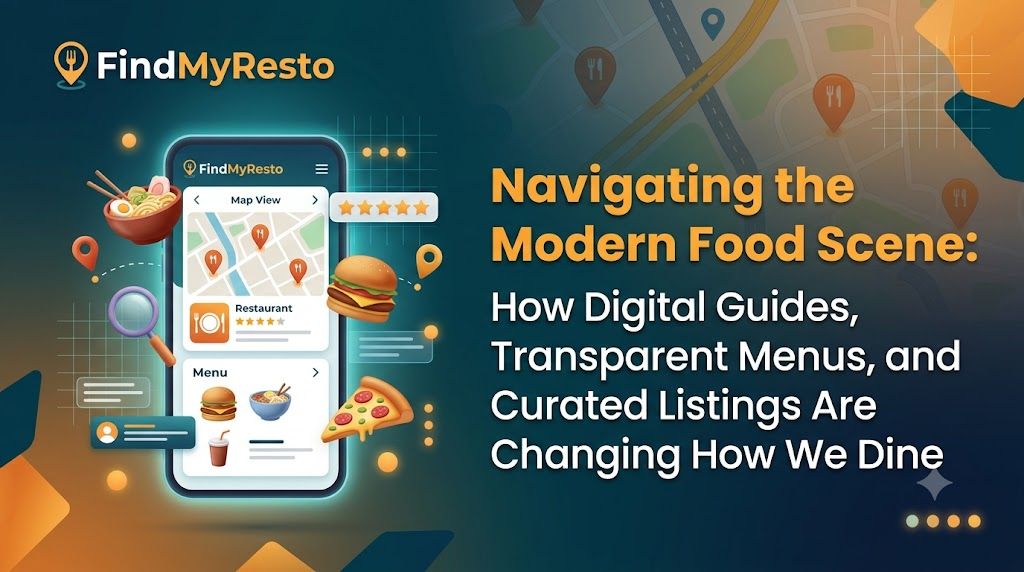
Navigating the Modern Food Scene: How Digital Guides, Transparent Menus, and Curated Listings Are Changing How We Dine

October 27, 2026 · 5 reads
1. Introduction: The Modern Dilemma of Deciding Where to Eat
We’ve all been there: it’s evening, everyone in the group is hungry, and nobody can agree on where to go. What should be one of life’s simplest joys—sitting down to a great meal—often turns into a twenty-minute spiral of indecision. Whether you’re coordinating an impromptu dinner with coworkers, tracking down a family-friendly spot that can seat six on a Saturday afternoon, or simply wandering an unfamiliar city hoping to find something authentic, the choices can feel paralyzing. You’re balancing practical considerations against personal cravings: distance, dietary needs, atmosphere, kitchen closing times, and, inevitably, the check at the end. A generation ago, you picked a spot because a friend swore by it, an ad caught your eye, or the front window looked inviting as you walked past. Today, our habits have evolved. Diners want real clarity before they commit their time, transit, and money. We want to know when the kitchen actually closes, what the dining room looks like, and what the food costs before we even pull on a coat.
How We Used to Decide                 How We Decide Now
--------------------                 -----------------
Word-of-mouth tips           -->     Targeted cuisine & area searches
Storefront window shopping   -->     Itemized digital menus & pricing
Flipping through paper flyers -->     Authentic dining room photography
Walking in and hoping        -->     Direct online table booking inquiries
When an establishment’s details are missing, scattered across social media, or flat-out outdated, prospective guests rarely investigate further—they simply keep scrolling.
This is where a specialized restaurant discovery platform makes a tangible difference. Rather than stitching together loose search engine clues, diners can rely on centralized resources like FindMyResto to explore verified profiles, scan clean digital menus, verify prices, and reach out directly to venue operators. Whether you’re surveying the food culture in your home zip code or scouting dining options halfway around the world, understanding how modern directories operate makes every meal out a safer bet.
2. What Is a Restaurant Discovery Platform, Really?
It’s helpful to distinguish between a general search engine and a dedicated restaurant discovery platform. If you type the name of an eatery into a standard web browser, you receive an undifferentiated wall of content: old press pieces, scattered forum threads, generic mapping pins, and perhaps a third-party review from three years ago.
A dedicated discovery platform, by contrast, behaves like an organized, purpose-built library designed exclusively for food lovers. It takes messy culinary data and structures it into standardized, comparable profiles based on how people actually choose meals:
- Location Boundaries: Filter by transit stops, historical quarters, arts districts, or specific blocks.
- Flavor Profiles & Cuisines: Zero in on authentic regional cooking, cross-cultural fusion, or traditional mainstays.
- Realistic Price Tiers: Separate everyday lunch spots from mid-tier family diners and special-occasion destinations.
- Concept Types: Distinguish bakeries, roasteries, food trucks, and cocktail bars from sit-down restaurants.
- Hospitality Formats: Identify establishments offering patio seating, curbside pickup, or traditional dine-in service.
Putting It Into Practice
Consider how different diners use this structure to cut through everyday noise:
- The Late-Night Professional: Ending an eight-hour conference travel day at 9:30 PM, a professional needs a healthy, sit-down meal within a short walk of their hotel that serves hot entrees past 10:00 PM. A curated directory lets them filter by distance and late operating hours in a few taps.
- The Multi-Generational Family: An aunt organizing a Sunday lunch for young children, parents, and elderly relatives needs a venue with step-free access, high chairs, and simple kid-friendly options. Browsing real interior photos and structured menus answers those questions in minutes.
- The Budget-Conscious Student: Sticking to a strict weekly food allowance, a student planning to catch up with a friend can calculate the exact cost of two mains and an appetizer before leaving campus, ensuring the bill won’t break their budget.
By organizing locations, menus, schedules, and photos into a uniform layout, a discovery platform removes the stress of the unknown.
3. The Practical Value of an Online Restaurant Directory
A dependable online restaurant directory serves as an interactive neighborhood guide, giving users a holistic view of an area’s food ecosystem. For everyday diners, relying on an organized portal brings distinct advantages over piecemeal internet searches.
+--------------------------------------------------------------------------+
|                 Anatomy of an Online Restaurant Directory                |
+--------------------+--------------------------------+--------------------+
|  Discovery Tools   |     Comprehensive Profiles     |   Direct Action    |
+--------------------+--------------------------------+--------------------+
| • Geographic tags  | • High-res room photos         | • Real-time hours  |
| • Flavor filters   | • Fully itemized digital menus | • Booking requests |
| • Cost indicators  | • Ingredient & dietary notes   | • Direct contact   |
| • Independent spots| • Transit & parking info       | • Mapping links    |
+--------------------+--------------------------------+--------------------+
Giving Independent Kitchens a Voice
Massive hospitality groups and fast-food chains naturally dominate traditional advertising channels because they have the marketing muscle to do so. An open directory levels that playing field. It gives modest corner bistros, family-run noodle houses, suburban bakeries, and immigrant-owned diners equal footing alongside recognizable national chains. Diners get to uncover unique culinary gems they would otherwise walk right past.
A Reliable Look Before You Go
A good directory entry offers an honest preview of an eatery’s character. Clear interior shots tell you right away whether a dining room is built for intimate conversation, high-volume celebrations, or quick solo meals. The venue’s written summary provides essential context on table policies, house specialties, and dress expectations, so you never arrive feeling out of place.
Reliable Logistical Information
Centralized directories pull together practical operational facts onto a single screen:
- Verified street addresses paired with mapping integrations for immediate driving or walking directions.
- Direct phone lines, messaging links, and verified email contacts.
- Clear business schedules, including afternoon kitchen breaks, public holiday changes, and weekly rest days.
A quick note on accuracy: While directory platforms do the heavy lifting to keep entries current, restaurant hours and seasonal offerings can shift without warning. Diners should treat listings as helpful guides and directly verify time-sensitive arrangements—such as holiday dinners or strict dietary requirements—with management before arriving.
4. Searching for “Restaurants Near Me” and Venturing Into New Neighborhoods
Few search terms are entered into mobile devices as frequently as restaurants near me. When hunger sets in on a road trip or you have 45 minutes between meetings, immediacy is everything. Yet mere distance is only one part of finding a satisfying meal.
       Walking Distance (Proximity)
                    +
       Menu Compatibility (Dishes You Want)
                    +
       Budget Fit (Prices You Expect)
                    +
       Vibe & Operating Hours (Open & Comfortable)
                    =
       A Genuinely Great Dining Outing
Common Scenarios Where Location Comes First
Proximity-based searches serve different purposes depending on the situation:
- The Morning Commute: Locating an independent coffee shop that serves warm breakfast items within a five-minute walk of your train station.
- The Midday Office Lunch: Tracking down a wholesome, fast-casual salad or sandwich bar close enough to the office to make a 45-minute lunch break work.
- Afternoon City Walks: Discovering a quiet courtyard café or tea parlor while wandering an arts district or touring a new city center.
- Late-Evening Arrivals: Pinpointing a late-night diner or neighborhood kitchen near your accommodations after standard dinner service has wrapped up.
Why Proximity Alone Isn’t Enough
A place 200 feet away isn’t much help if it’s a traditional smokehouse and half your group eats vegan. Similarly, a nearby dining room that charges three times your intended budget, or one that requires formal reservations you don’t have, won’t save the evening.
Using an online directory allows you to pair physical location with secondary filters like cuisine styles, price tiers, and dietary tags. That way, the nearest open door is actually somewhere you want to sit down and eat.
5. Why Reviewing Menus and Prices in Advance Is Essential
Menu transparency is arguably the biggest deciding factor for modern diners. Nothing dampens an evening out faster than sitting down, opening a paper menu, and discovering that the food doesn’t appeal to your group—or that prices are significantly higher than expected. Checking restaurant menus and prices ahead of time eliminates that awkwardness and lets everyone relax.
+--------------------------------------------------------------------------+
|                     Smart Menu Pre-Check Checklist                       |
+--------------------------------------------------------------------------+
| [ ] Individual dish prices (not vague $ / $$ signs)                      |
| [ ] Explicit vegetarian, vegan, and gluten-safe callouts                 |
| [ ] Documented allergen flags (nuts, dairy, shellfish, sesame)           |
| [ ] Authentic food photography rather than generic stock imagery         |
| [ ] Disclosed service fees, mandatory gratuities, or local dining taxes  |
| [ ] Portion sizing context (individual plate, family-style, a la carte)  |
+--------------------------------------------------------------------------+
Descriptive Listings and Clear Layouts
A well-designed digital menu splits food into clear, sensible sections: starters, soups, mains, shared platters, desserts, and drinks. Meaningful descriptions explain primary ingredients, preparation techniques (slow-braised, flame-broiled, clay-pot-cooked), and spice indicators. This clarity helps guests select plates that match their preferences before placing an order.
Budget Planning Without the Guesswork
Vague pricing symbols (like $, $$, or $$$) give you only a rough estimate of what an evening might cost. A detailed digital menu with individual dish prices lets you calculate a realistic per-person spend. This is particularly helpful when organizing birthday dinners or work gatherings where guests want to know expected costs in advance.
Navigating Dietary Needs and Allergens Safely
For diners living with food allergies (such as celiac disease, tree nut sensitivities, or severe lactose intolerance), menu clarity is a matter of health and safety, not just convenience.
Menus that clearly mark ingredients and feature dietary icons (such as gluten-free, vegetarian, vegan, halal, or kosher) allow guests to browse safely.
Safety Reminder: Online menus may not immediately reflect last-minute pantry substitutions or seasonal changes. Anyone with serious medical allergies should always inform their server and confirm preparation methods directly with the kitchen upon arrival.
Accounting for Base Prices vs. the Final Check
When browsing a digital menu, keep in mind that printed figures generally represent the base cost of each item. Depending on local tax laws and house policies, your final bill may include:
- Regional, state, or national sales taxes (e.g., VAT, GST).
- Automatic gratuity or service fees applied to parties over a certain size.
- Cover charges, bread service fees, or filtered water charges common in certain dining cultures.
Checking a digital menu beforehand helps prevent unpleasant surprises when the check arrives at the table.
6. How to Find Restaurants by Cuisine to Satisfy Any Craving
Dining out is a celebration of culture, craft, and distinct flavors. One of the greatest pleasures of eating away from home is enjoying complex, slow-cooked dishes or regional specialties that are difficult or time-consuming to make in your own kitchen. The ability to find restaurants by cuisine cuts through search noise and leads diners straight to the dishes they’re craving.
             [ Exploring Culinary Traditions ]
                             |
         +-------------------+-------------------+
         |                                       |
[ Longtime Mainstays ]                [ Deep Regional Traditions ]
 • Italian (Handmade pasta, Pinsa)     • Thai (Herbal curries, Street noodles)
 • Chinese (Cantonese, Sichuan)        • Mexican (Oaxacan moles, Birria)
 • Indian (Tandoor, Biryanis, Dosa)    • French (Classic brasserie fare)
 • Japanese (Ramen, Izakaya, Omakase)  • Mediterranean (Mezze, Charred meats)
Touring the World’s Cuisines
A structured directory allows you to filter your dining searches by specific culinary regions:
- Italian: Distinguishes rustic trattorias serving fresh pasta from neighborhood pizzerias firing authentic Neapolitan pies.
- Indian: Separates slow-cooked North Indian gravies and tandoori specialties from crispy South Indian dosas and spiced lentil dishes.
- Chinese: Helps diners choose between delicate dim sum parlors and fiery Sichuan stir-fries or hot pots.
- Japanese: Lets patrons pick between casual ramen noodle counters, lively robata grills, and quiet sushi bars.
- Mexican: Showcases culinary breadth ranging from coastal ceviches and rich Oaxacan moles to quick neighborhood taquerias.
- Thai: Directs guests toward balanced regional curries, fragrant noodle dishes, and fresh, herb-packed salads.
- French: Separates relaxed neighborhood bistros (serving steak-frites and onion soup) from high-end classic dining rooms.
- Mediterranean: Groups establishments highlighting extra-virgin olive oil, fresh seafood, mezze dips, and grilled skewers.
Broadening Your Culinary Boundaries
Cuisine filters are also an invitation to try something new. When your regular dining rotation starts feeling stale, browsing unfamiliar styles can introduce you to wonderful traditions—like Ethiopian injera platters, Peruvian tiraditos, or savory Georgian khachapuri.
For dining groups with varied tastes, cuisine tags make it simple to find versatile options—like pan-Asian menus or contemporary fusion bistros—that offer balanced choices for every guest.
7. Finding Affordable Restaurants Near Me Without Sacrificing Quality
Keeping dining costs reasonable is an everyday concern for most people. Searching for affordable restaurants near me doesn’t mean you have to settle for bland food, indifferent service, or an uncomfortable setting. True culinary value is about finding establishments that serve well-prepared, thoughtful meals at fair prices.
+--------------------------------------------------------------------------+
|                  Balancing Cost with the Dining Experience               |
+--------------------------+-----------------------------------------------+
| Where Value Lives        | What Savvy Diners Look For                    |
+--------------------------+-----------------------------------------------+
| Strategic Timing         | Fixed-price lunch deals, midday combination sets|
| Shared Traditions        | Family-style plates, shared mezze spreads     |
| Service Formats          | Fast-casual dining rooms, counter-service gems|
| Kitchen Philosophy       | Seasonal, locally sourced staples over luxury |
+--------------------------+-----------------------------------------------+
Rethinking Dining Value
Affordability is entirely relative. A cheap plate of food that is cold, stale, or poorly cooked offers terrible value, no matter how little you paid. On the other hand, a moderately priced neighborhood eatery that serves generous portions made with fresh ingredients offers outstanding value.
Diners can get more out of their budget by paying attention to a few smart dining strategies:
- Lunch Specials and Set Menus: Many mid-tier and formal dining rooms offer fixed-price midday menus that feature smaller portions of their signature dinner dishes at a substantial discount.
- Shared Dining Formats: Cuisines built around shared plates—such as Spanish tapas, Middle Eastern mezze, or Chinese family-style meals—let groups sample a broad range of dishes while splitting costs evenly.
- Fast-Casual Counters: Modern fast-casual kitchens often work with the same farm-fresh suppliers as formal dining rooms. By paring back traditional table service, they pass those savings directly on to diners.
Comparing Costs Across Everyday Dining Concepts
Note: The following breakdown illustrates budgeting across common dining styles.
| Dining Concept | Hospitality Format | Expected Price Tier | Practical Advantages |
| Neighborhood Pizzeria | Casual table service | Low to Moderate | Large, easily shared portions; budget-friendly for groups. |
| Midday Noodle Bar | Fast counter service | Economical | Quick turnaround; satisfying single-bowl meals. |
| Suburban Bistro | Full table service | Moderate | Daily prix fixe options; solid multi-course balance. |
| Downtown Steakhouse | Formal full service | Upper Tier | Premium aged cuts; a la carte sides and service fees apply. |
Evaluating menus, portion sizes, and category pricing online helps diners find meals that match their personal budget without cutting corners on the overall experience.
8. Making a Restaurant Table Booking Online: What You Need to Know
Reserving a table in advance spares you the frustration of arriving at a packed dining room only to be told there’s an hour-long wait. Using restaurant table booking online tools has become standard practice for family celebrations, client dinners, and weekend date nights.
                    How an Online Table Inquiry Moves
                    ---------------------------------
[ Select Restaurant, Date, Preferred Time & Headcount ]
                          |
                          v
[ Submit Digital Table Booking Request ]
                          |
                          v
[ Front-of-House Team Evaluates Table Availability & Shift Plan ]
                          |
                          v
[ Guest Receives Direct Booking Confirmation or Alternate Time ]
Information Typically Required
When filling out a digital reservation form, you’ll usually be asked for basic logistics to help the host team organize their seating chart:
- Total Party Size: The exact breakdown of adults, children, and infants.
- Requested Date & Time: Your ideal arrival time, often with a short flexible window in case the exact time is full.
- Contact Information: A reliable mobile number and email address for reservation confirmations.
- Seating Notes: Requests for high chairs, mobility needs, or outdoor terrace preferences where available.
Booking Inquiries vs. Confirmed Reservations
A frequent point of confusion is assuming that clicking “Submit Request” means your table is immediately secured.
On many directory websites and platform listing profiles, booking tools operate as formal booking requests. This means the restaurant’s operational team reviews the request against their current floor chart, confirms available seating, and issues a verified confirmation.
Before heading to the restaurant, guests should look for a confirmation text, notification email, or phone call from the team. If your dining plans are time-sensitive or involve a large party, calling the restaurant directly to double-check the booking provides added peace of mind.
9. How Hospitality Businesses Profit From a Free Restaurant Listing
While structured discovery simplifies life for diners, it offers critical visibility for restaurant operators as well. For independent bistros, corner bakeries, and family diners, marketing budgets are usually tight. Securing a free restaurant listing on an established platform helps independent operators build a professional online presence without adding expensive overhead.
Traditional Marketing               Digital Directory Presence
---------------------               --------------------------
High upfront design fees       -->  Zero-cost baseline profile entry
Printed menu waste upon change -->  Quickly updated digital menu cards
Limited neighborhood reach     -->  Visibility to travelers & residents
Static window displays         -->  Searchable cuisine & location tags
The Real Value of an Online Profile
A public profile in a recognized directory provides an operational home for a restaurant’s essential business details:
- Discoverability: A listing puts your venue in front of diners actively looking for specific cuisines, dietary options, or nearby meals.
- Accurate Information Control: Claiming and maintaining a profile ensures that customers see verified phone numbers, correct street addresses, and accurate operating hours rather than outdated guesses.
- Visual Storytelling: Uploading clear photographs of dishes, dining rooms, and patio spaces helps restaurants showcase their ambiance and culinary point of view.
- Direct Customer Inquiries: Giving prospective diners access to primary telephone lines, email addresses, and reservation forms lowers the barrier between interest and a seated customer.
Platforms like FindMyResto offer hospitality owners the opportunity to list your restaurant online for free, helping them create a public profile, publish digital menus, and present their businesses to local and international diners without upfront directory charges.
10. How to List Your Restaurant Online and Build a Compelling Profile
Creating a business listing takes only a few minutes, but building a profile that effectively turns casual browsers into seated customers requires attention to detail. Restaurant owners should prepare accurate, comprehensive operational data before publishing their profiles.
        Steps to a High-Converting Restaurant Profile
        ---------------------------------------------
[ Step 1: Accurate Core Data ]   --> Official Name, Address, Contact Line
[ Step 2: Honest Categorization ] --> Primary Cuisine, Dining Style
[ Step 3: Up-to-Date Menu Data ]  --> Clear Categories, Descriptions, Prices
[ Step 4: Authentic Imagery ]     --> Natural Lighting, Real Food & Seating
[ Step 5: Routine Audits ]        --> Prompt Updates for Seasons & Hours
Practical Guidelines for an Effective Profile
- Use Your Exact Public Business Name: Stick to the clear, recognizable name displayed on your storefront. Avoid cluttering your title with marketing taglines or keyword stuffing.
- Provide Complete Physical and Contact Details: Supply a complete street address, including suite numbers, cross streets, and postal codes. Include a direct phone line and a regularly checked inbox.
- Choose Accurate Cuisine and Service Categories: Select tags that match your everyday menu. Labeling a casual café as a fine-dining venue will only disappoint diners expecting a different style of service.
- Upload Clear, Authentic Photographs: Share well-lit photographs of popular dishes, beverages, the dining room, the bar area, and any patio spaces. Avoid heavily filtered or stock images that fail to reflect the actual food and setting.
- Publish a Clear, Itemized Digital Menu: Present your menu in a clean, easily readable format. Include dish names, brief ingredient descriptions, allergen labels, and current prices.
- Clearly State Regular and Holiday Hours: Clearly indicate kitchen closures, mid-afternoon breaks, and weekend operating hours. Update these details promptly when holiday seasons approach.
- Highlight Signature Specialties: Write a concise, genuine overview of what sets your kitchen apart—whether it is naturally fermented pizza dough, house-smoked barbecue, or regional family recipes.
- Regularly Review and Maintain Profile Accuracy: Set a calendar reminder to review your profile every few months. Update prices if ingredient costs change, swap out seasonal dishes, and adjust hours as your operations evolve.
11. Why a Restaurant Menu Website Offers Greater Customer Convenience
For many diners, their dining journey begins with a dedicated restaurant menu website. In decades past, visitors had to hunt through third-party photo uploads to read blurry, low-resolution photographs of wrinkled paper menus. Today, clean digital menus are an expected standard of modern hospitality.
+--------------------------------------------------------------------------+
|                  Digital Menus vs. Scanned Paper PDFs                    |
+--------------------------+-----------------------------------------------+
| Modern Digital Menu Card | Outdated Scanned PDF / Image Upload           |
+--------------------------+-----------------------------------------------+
| • Loads quickly on mobile| • Heavy file size; consumes mobile data       |
| • Responsive text layout | • Requires awkward pinch-and-zoom navigation  |
| • Clear, readable prices | • Frequently blurry or poorly lit             |
| • Categorized navigation | • Difficult to read on small screens          |
| • Updated in real time   | • Often shows outdated dishes and prices      |
+--------------------------+-----------------------------------------------+
Clear Benefits for Diners
A mobile-optimized digital menu card provides several key advantages:
- Mobile-Friendly Layouts: Clear digital menus adapt cleanly to smartphone displays, eliminating the need to zoom in on low-resolution image files.
- Structured Organization: Customers can jump between starters, main courses, sides, and beverage sections without scrolling endlessly through unorganized documents.
- Dietary Badges: Direct nutritional notes, vegetarian indicators, and spice scales are easier to spot when presented within clean digital layouts.
Advantages for Small Food Businesses
Building and maintaining a custom website with dynamic menu functions can be expensive and technically demanding for independent food trucks, bakeries, and neighborhood cafés.
Using an established discovery directory as a digital menu host gives owners a stable, professional web presence. It allows them to present clear menus, business hours, and location maps to the public without paying web development agencies or managing server infrastructure.
12. Preventable Missteps When Searching for or Listing a Restaurant
Both diners and restaurant operators occasionally run into preventable misunderstandings during the online discovery process. Keeping a few practical guidelines in mind helps ensure smooth experiences for both sides of the table.
               Common Pitfalls & Direct Solutions
               -----------------------------------
[ Diners ]
• Mistake: Assuming photos reflect current portions or daily specials.
  --> Solution: Read recent menu descriptions and confirm daily offerings.
• Mistake: Assuming online booking requests are instantly confirmed.
  --> Solution: Look for a confirmation email/call before arriving.
• Mistake: Relying on generic third-party holiday hours.
  --> Solution: Check the venue's active profile or call directly.

[ Owners ]
• Mistake: Leaving outdated prices or discontinued dishes online.
  --> Solution: Review and update your digital menus quarterly.
• Mistake: Uploading low-resolution, poorly lit food photos.
  --> Solution: Use clean, natural lighting to showcase authentic dishes.
• Mistake: Ignoring incoming booking or customer inquiries.
  --> Solution: Designate staff to review email and platform notifications.
Pitfalls for Diners to Avoid
- Relying Strictly on Photos: Menus evolve, plating changes, and seasonal ingredients come and go. Always read current dish descriptions rather than depending entirely on images posted months earlier.
- Overlooking Additional Charges: Avoid assuming that the price listed on the menu is the final total. Remember to account for local sales taxes, mandatory dining fees, or service charges when estimating your bill.
- Treating Requests as Confirmed Reservations: Submitting a booking form is the initial step in the process, not an instant confirmation. Always verify that the restaurant has accepted the reservation before heading out.
- Forgetting to Check Allergy Information: Never assume a dish is free from specific allergens simply because they are not highlighted in a brief title. Always speak directly with your server to confirm ingredients if you have an allergy.
Pitfalls for Restaurant Owners to Avoid
- Publishing Incomplete or Outdated Menus: Leaving discontinued dishes or old prices on your profile leads to awkward conversations at the table and frustrates customers.
- Neglecting Contact Details: An unmonitored telephone number or an incorrect street address will drive potential patrons directly to competing businesses.
- Using Misleading Imagery: Heavily edited stock photos create unrealistic expectations. Authentic, clear, and well-lit photographs of your real dishes establish trust and present your food honestly.
- Selecting Irrelevant Categories: Tagging your business with popular cuisine categories that you do not actually serve will disappoint diners and generate negative feedback.
13. Final Thoughts: Making Every Dining Decision a Confident One
A great meal shared with family, colleagues, or friends is one of life’s simple pleasures. Yet, getting to that table shouldn’t require clicking through dozens of disconnected links, deciphering blurry photos of paper menus, or worrying about unexpected fees when the check arrives. Centralized directories, digital menus, cuisine filters, and online booking requests have made modern restaurant discovery straightforward and reliable. Diners can easily find hidden neighborhood spots, explore international cuisines, and verify menu pricing before leaving home. At the same time, food operators—from independent bistros to growing regional establishments—can share their menus, dining spaces, and unique stories with a wider audience. Successful dining discovery ultimately comes down to clear information, transparent menus, and direct communication. When diners know what to expect and restaurants present their offerings accurately, great dining experiences naturally follow. For food enthusiasts eager to discover their next favorite meal, exploring curated listings on FindMyResto offers a simple, convenient starting point.
Leave a Reply