Continuous Telemetry for People Ops: Treating Attendance as an Automated Pipeline

October 29, 2026 · 12 reads
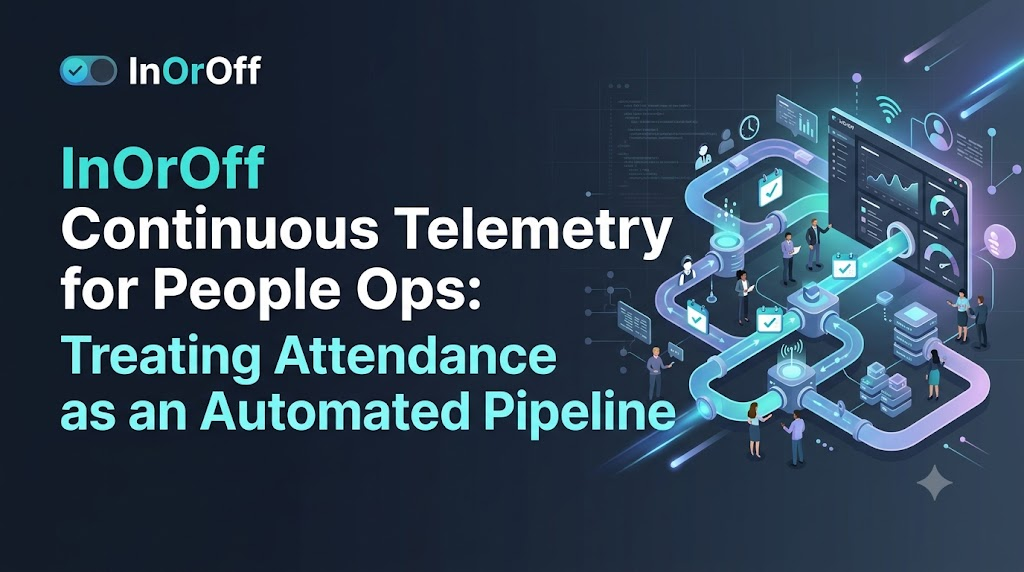
In modern infrastructure engineering, no one would ever deploy an unmonitored production environment, skip telemetry on basic transactions, or rely on manual log scraping at the end of the month to understand system health. Yet across countless growing organizations, workforce operations are managed in that exact fragmented manner.
Nowhere does this architectural debt surface more aggressively than during the monthly payroll reconciliation window.
What should be an automated data pipeline instead becomes a manual incident response drill. HR leads and supervisors find themselves triaging missing exit events, reconciling ad-hoc permissions buried inside direct message threads, and guessing whether a late-night operational fix should be classified as paid overtime. When human labor is recorded across physical registers, printed ledgers, or static spreadsheets that allow silent data mutations, tracking hours turns into an endless loop of administrative reconciliation.
Modern Employee Attendance Management Software addresses this friction by applying structured data hygiene to workforce timekeeping. Purpose-built platforms like InOrOff show how treating check-ins, scheduled leave, shift states, and compensation rules as unified event streams eliminates the manual scramble, maintains an auditable historical log, and delivers clean data straight to payroll.
Here is a practical examination of how digital attendance pipelines function, where manual approaches break down, and how to build a reliable workforce tracking setup.
The Latent Operational Debt of Manual Timekeeping
Relying on paper notebooks at an entrance or shared spreadsheets on a local drive seems cheap at low headcount. However, informal methods introduce subtle failure modes that compound as the team scales:
- Unmonitored State Drift: A ten-minute late arrival on Tuesday or an untracked break extension on Thursday appears negligible in isolation. Across fifty or one hundred people over a full operating year, unmetered slippage aggregates into hundreds of paid, unproductive hours.
- Transcription Errors and Payroll Discrepancies: Manually moving numbers from sign-in binders or open files into financial ledgers invites continuous human error. Underpaying a worker immediately damages morale and trust; overpaying triggers awkward, time-consuming recovery cycles that strain team relations.
- Silent Scheduling Collisions: When leave requests are granted through casual hallway conversations or unlogged direct messages, operational visibility breaks down. Critical delivery schedules stall simply because an absence was never propagated to the master deployment calendar.
- Compliance and Audit Exposure: Labor frameworks enforce strict mandates regarding maximum working limits, compulsory rest intervals, and overtime compensation. In an official wage dispute or compliance audit, an editable spreadsheet offers zero legal defensibility.
- Degraded Parity for High Performers: Dependable personnel who show up on schedule and handle critical crunch hours notice when uncalibrated systems treat strict punctuality and chronic absenteeism with identical indifference. Clear tracking creates an objective, company-wide baseline that everyone can inspect.
Transitioning to an automated digital system replaces subjective guessing with clear, verifiable operational facts.
Core Requirements for a Modern Attendance Framework
At its foundation, an attendance management platform acts as an active, centralized ledger. Rather than storing inert numbers that only get looked at when things go wrong, the software actively compares daily punches against established company policies in real time.
Different operational topologies require distinct technical capabilities:
Early-Stage and Agile Teams
Growing teams need low overhead. Rather than complex multi-tiered approval chains, small groups benefit most from straightforward self-service check-ins, a painless way to request a personal day, and a clean summary ready for monthly bookkeeping.
Multi-Department Organizations
As companies expand across distinct departments and branches, informal coordination breaks down. Growing enterprises require automated overtime rules, configurable shift scheduling, and tiered manager approvals so department supervisors can manage their direct teams without bottlenecking human resources.
Industrial, Shift-Based, and Deskless Workforces
For manufacturing plants, logistics hubs, retail storefronts, and traveling field personnel, an office binder is completely useless. These teams need flexible entry methods—such as mobile check-ins with location tags or wall-mounted biometric terminals—that capture timestamps accurately on site.
Deconstructing the Daily Attendance Pipeline
To evaluate the functional impact of dedicated Employee Check In Check Out Software, it helps to examine how an event flows through an ordinary working day.
Event Ingestion and Identity Verification
The shift opens with an authenticated check-in event suited to the working environment—an RFID badge scan at an access turnstile, a biometric scan at a shop floor terminal, or a mobile check-in with GPS verification for an off-site consultant. The system stamps the exact timestamp instantly against the published roster.
Incorporating Practical Grace Buffers
Real-world systems must tolerate physical-world variance. Rail delays, bad weather, and transit disruptions happen regularly. Robust platforms handle this via configurable grace buffers. An eight- or ten-minute tolerance ensures that a minor delay does not trigger an unfair penalty while still logging the precise arrival time for record integrity.
Break Monitoring and Rest Intervals
For hourly personnel or regulated sectors, logging intermediate break states ensures compliance with mandatory rest standards while giving dispatchers and supervisors live visibility into current active capacity.
Session Close and Overtime Routing
When the shift ends, the employee clocks out. The software measures net hours worked against the scheduled baseline. If an unexpected operational emergency required someone to stay past their regular schedule, that extra time routes directly into a manager’s verification queue, ensuring legitimate effort is rewarded without leaving room for unsanctioned overtime.
Resolving Missing Punches: A Practical Workplace Scenario
Consider a site reliability technician named Dev. He checks in for his shift at 8:00 AM. At 4:45 PM, an urgent hardware failure occurs in the primary testing lab. Dev assists the team with physical diagnostics and component replacement, finally leaving the facility at 6:30 PM. In the urgency of the incident, he forgets to log out at the exit terminal.
Under an obsolete manual system, this missing departure would linger undetected until payroll compilation weeks later, necessitating frantic emails and guesswork.
In a modern digital workflow:
- The platform identifies the unclosed session during its automated overnight validation pass and flags an attendance exception.
- The next morning, Dev receives an automated prompt on his dashboard to resolve the missing departure. He enters 6:30 PM along with a short system note: “Assisted with critical hardware replacement in testing lab.”
- His team lead receives an instant review notification, verifies the incident, and approves the entry along with 1.5 hours of legitimate overtime with a single action.
- The centralized ledger updates immediately, preserving an immutable audit log detailing who requested the update and who authorized it.
Connecting Daily Presence with Leave Management
Treating daily time tracking and absence management as decoupled services is a fundamental design flaw. When an employee is absent, a manager should never have to query multiple disparate systems to find out whether they are sick, on approved holiday, or simply absent without notice.
A coordinated Attendance and Leave Management System links these data streams into a single synchronized state:
- Pre-Populated Leave Schedules: Approved vacations propagate to the active roster in advance, preventing automated false alarms regarding absenteeism.
- Partial-Day Permissions: If an employee steps out for a two-hour medical appointment, the leave module balances that interval against daily baseline requirements without manual intervention from HR.
- Peer-to-Peer Shift Exchanges: Staff can coordinate shift swaps directly within their portal, updating the schedule automatically once a supervisor approves the switch.
- Self-Service Leave Ledgers: Workers can query their remaining vacation, casual, or medical balances directly on their own devices, eliminating repetitive status checks sent to administrative staff.
Building an Audit-Ready Payroll Pipeline
The ultimate downstream consumer of attendance data is the payroll calculation engine. Transforming raw daily timestamps into audit-ready compensation records traditionally involves significant friction, but modern software standardizes it into four predictable phases:
- Timestamp Ingestion: The software aggregates all check-in, departure, and verified break timestamps recorded across the billing cycle.
- Policy Compilation: The system’s rules engine evaluates standard hours, night differentials, rest-day compensation, and authorized overtime allocations automatically according to company policy.
- Absence Reconciliation: Approved paid leave days are validated, while unauthorized absences or unpaid leave periods are classified as non-payable to prevent accidental financial overpayments.
- Structured Data Export: Once supervisors complete their department reviews, the clean, audited datasets export directly into standard formats ready for import into payroll software, reducing days of manual calculation down to a brief administrative review.
Core Capabilities to Prioritize
When evaluating software options, look past superficial interface designs and focus on structural functionality that supports day-to-day operations:
- Versatile Entry Options: Select a platform that matches your operating environment—biometric terminals for manufacturing floors, RFID card readers for corporate offices, or geofenced mobile verification for field teams.
- Adaptive Rostering Tools: Make sure the system can manage rotational schedules, split shifts, and mandatory rest periods between consecutive working shifts without administrative headaches.
- Employee Self-Service Portals: Giving team members direct access to their historical timecards, leave balances, and regularizations encourages personal accountability and cuts down on routine balance queries sent to HR.
- Permanent Audit Histories: Every manual correction, supervisor sign-off, and policy override must create an immutable, timestamped record to guarantee legal compliance and operational transparency.
Rolling Out the Pipeline Without Team Friction
Deploying new operational software is fundamentally an exercise in change management. If rolled out without clear context, staff members may view it as intrusive oversight rather than an operational improvement.
- Standardize Policies First: Software can only execute the rules you provide. Before configuring the platform, write down clear, simple guidelines covering working hours, grace periods, break rules, and overtime policies.
- Conduct a Targeted Pilot: Run the platform with one or two representative teams first—such as an administrative department alongside an on-site operational crew. A small-scale pilot reveals workflow bugs and edge cases before a company-wide rollout.
- Highlight Employee Benefits: Make sure employees understand how the software works in their favor. It guarantees that overtime is credited accurately, keeps leave balances transparent, and protects paychecks from administrative errors.
Balancing Accountability and Trust
Modern tracking tools offer substantial operational visibility, but thoughtful leadership requires recognizing the clear line between operational accountability and counterproductive micromanagement.
Collect only the data needed to verify working commitments. For field technicians, confirming their location at the moment they clock in is reasonable; tracking their precise movements throughout their personal lunch hour is invasive. Always ensure biometric records and personal data are strongly protected, and treat attendance systems as a foundation for workplace equity rather than a punitive surveillance tool.
A Scalable Foundation for Team Growth
Moving away from scattered sign-in sheets and confusing spreadsheets is one of the most practical upgrades an organization can make. It protects payroll budgets, spares administrative staff from endless reconciliation cycles, and gives everyone clear visibility into operational coverage without constant follow-up messages.
Platforms like InOrOff show how bringing daily time tracking, shift schedules, and leave administration together establishes a calmer, more dependable workplace culture. When time is tracked accurately and without friction, companies can spend far less energy managing paperwork and far more time helping their people thrive.
Leave a Reply